


Understanding lockout tagout is the first step in building a safe environment. It is designed to protect employees or individuals mainly involved in the service and maintenance activities against any unexpected start-up of machines or the release of stored energy that may result in injuries.
This article aims to explain the technical procedures and equipment necessary to neutralize hazardous energy in industrial settings.
What is Lockout and Tagout in Safety?
Lockout and tagout are a planned safety procedure that disables the energy supply to industrial machinery. The purpose of lockout/tagout and LOTO safety is to protect employees from “energized” states.
Lockout (Physical Safety Control)
Lockout devices secure energy-isolating equipment in a safe or “off” position, stopping machines from re-energizing as they can only be removed using a key or unique unlocking method. As the primary system for controlling hazardous energy during maintenance, they are used on circuit breakers, valves, and disconnect switches alongside strict safety procedures.
Lockout is usually the ideal choice because:
- It ensures stronger protection as locks are hard to remove.
- It is recognized as a true safety device.
- It offers a physical barrier against re-energization.
Lockout is used when equipment can be secured with a locking mechanism, including:
- Equipment with a hasp or lock attachment point.
- Built-in locking mechanisms.
- Devices that can be locked without dismantling or changing them.
Tagout (Warning-Based Safety Control)
Tagout devices serve as warning indicators to alert employees not to reenergize equipment during servicing or maintenance. They are affixed to energy-isolating equipment by authorized personnel.
Unlike lockout, tagouts…
- do not physically prevent access or operation.
- are easier to remove.
- serves mainly as a warning rather than a restraint.
Tagouts can also be less reliable because:
- They can be damaged by chemicals or environmental conditions.
- They may be lost or ignored.
Both lockout and tagout in electrical safety protect workers. But if tagout is used instead of lockout, it must provide the same level of protection through additional safety measures.
The Risk Logic: Isolation, Locking, and Tagging
The LOTO process follows a strict engineering logic. It moves through three critical phases to ensure a machine cannot move.
Phase 1: Isolation
Isolation involves finding every energy source. This includes electrical breakers, gas valves, and steam lines. A technician must turn these off to stop the flow of power.
Phase 2: Locking
Once isolated, the energy point must be physically secured. This is where safety padlocks and hasps come into play. A hasp allows multiple workers to place their own locks on one energy source. The machine cannot restart until every single lock is removed.
Phase 3: Tagging
Tags provide the data layer of safety. They identify the authorized person and the date of the work. Tags must be durable enough to withstand chemical or outdoor environments without becoming unreadable.
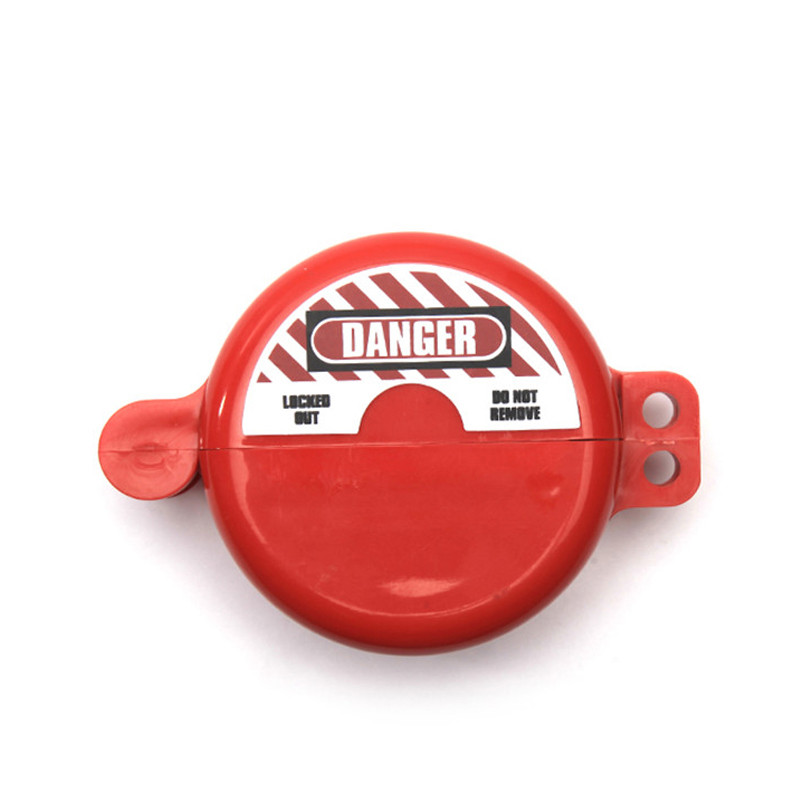
BD-Q21 Gas Cylinder Valve Safety Lock
Fits valve stem ≤30mm, tool-free snap-on, dual lock holes for multi-person LOTO.
Inquiry NowIndustry Case Studies: The Cost of Failure
Chemical Processing Incident
OSHA Accident Report: Chemical pump leak burns workers
What happened:
- Date: May 1, 2021
- Industry: Plastics / chemical manufacturing
- Incident: Pump seal failure caused phenol to spray during maintenance
- Result: Workers suffered severe chemical burns; one was hospitalized
- Cause factors: Residual pressure, equipment failure, and inadequate isolation procedures
Pipeline / Power Generation Failure
OSHA Case Study: Sour Water Pipeline Repairs
What happened:
- Industry: Oil & gas / chemical processing
- Task: Pipeline repair involving hazardous “sour water”
- Incident: Workers opened the line without fully locking out all valves
- Result: Exposure to toxic chemicals
- Cause factors: One valve was not locked or properly verified before work began
LOTO Training
Lockout and tagout safety training ensures every employee knows their role. Safety experts recommend training three groups of employees:
Authorized Employees
These are who perform lockout/tagout and maintenance. They receive at least annual training and must understand:
- Hazardous energy recognition
- Type and magnitude of energy present
- Energy control devices and their use
- Isolation and control points
- Lockout/tagout devices and procedures
- Proper re-energizing steps
| Fun Fact: Many facilities use a lockout tagout safety quiz answers sheet during annual reviews. These help confirm that staff understand the difference between a simple “off” switch and a locked-out state, while reinforcing that only the person who put the lock can remove it. |
Affected Employees
These are who operate the equipment being serviced. They are trained initially and when changes occur. They must:
- Recognize lockout/tagout devices
- Understand their purpose
- Know when control procedures are in use
- Never disturb devices
- Understand the risks of non-compliance
Other Employees
These compose all remaining staff. They are trained through orientation and safety meetings to:
- Understand the purpose of lockout/tagout
- Never touch locks, tags, or affected equipment
Conclusion
Understanding lockout tagout is important for any industrial operation. It is a systematic approach to controlling hazardous energy through isolation, locking, and tagging. By following these steps, companies prevent life-altering injuries and maintain a productive workforce.
BOZZYS provides a comprehensive range of safety solutions, specializing in Lockout/Tagout (LOTO) products. We serve industries including manufacturing, energy, petrochemical, construction, power maintenance, and laboratories. Moreover, our products meet CE, ATEX, ANSI, ISO 9001, and ISO 45001 standards, ensuring compliance, quality, and safety.
For customized safety advice, you can contact their engineering team directly.


